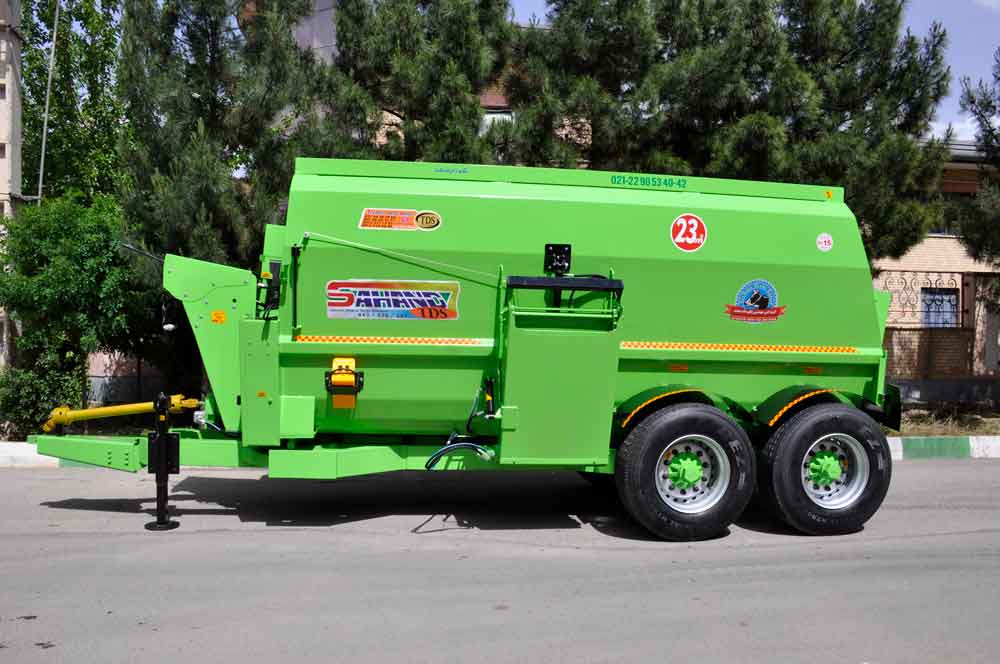
Feed mixers and their benefits
A feed mixer is useful on both traditional and industrial livestock farms. It may be called a ration mixer or feed-preparation machine. Depending on the model, power can come from a tractor, an electric motor or a self-propelled drive.
How a feed mixer works
Feed mixers chop and combine ingredients to prepare total mixed rations (TMR) for cattle and sheep. Forage, straw, concentrates and supplements are loaded in the proportions required by the feeding plan. The prepared feed is then discharged into feed troughs or transferred to the feeding area.
Potential benefits of using a feed mixer
- Better tracking of feed ingredients when a weighing system is fitted
- Less unnecessary feed loss with consistent chopping and mixing
- More uniform rations for animals
- Potential support for more stable milk production and milk composition through better feeding management
- Reduced manual feed handling and labour requirements
The actual results depend on ration formulation, animal health, operator practices and farm management.
Tractor-operated mobile mixers
These machines are suitable for farms with sufficient room for a tractor to move and turn. The mixer is taken to the forage storage area for loading; after mixing, the tractor moves alongside the feeding trough and discharges the ration through the designed unloading mechanism.
Stationary or electric mixers
Stationary units may be suitable where tractor traffic is restricted or feed preparation is centralised. Ingredients are loaded into a fixed mixer and the prepared ration is delivered to the animals using suitable handling equipment. Many stationary models use an electric drive.
Choosing the mixer size
Mixers are produced in various sizes for smaller and larger farms. Appropriate capacity depends on batch size, feed density, available space, feeding frequency and how the ration is loaded and distributed.